The safest way to remove moss from a roof is to choose the method for the roof, not the other way round. Most tiled roofs can be cleaned with low-pressure steam, delicate tiles may need careful hand scraping, and controlled pressure washing is only right where the covering can take it. A biocide treatment afterwards can help slow regrowth. Climbing onto a roof yourself is rarely worth the risk.
Why moss grows on roofs in Hampshire
Moss likes shade, moisture and a rough surface to hold on to. North-facing slopes, roofs under trees and older concrete or clay tiles tend to collect the most. Across Southampton, the New Forest and the wider Hampshire area, damp autumns and winters give it plenty of time to spread.
A little moss is mostly a cosmetic issue. Heavy growth is different. It holds water against the tiles, sheds into gutters and valleys, and can make a well-kept home look older than it is.
The main ways moss is removed
Every roof is different, so we check the tiles, their condition, the access and the level of growth before recommending how a roof should be cleaned. These are the methods we use on our roof cleaning jobs.
Low-pressure steam cleaning
Hot, low-pressure steam helps lift moss, algae, lichen and dirt without relying on an aggressive jet. It is our most popular roof-cleaning method because it suits many tiled roofs.
Careful hand scraping
Delicate coverings, including rosemary and peg tiles, may be scraped with profile-matched tools and telescopic equipment before a suitable treatment is considered. It is slower, but it is gentler on tiles that would not cope with more force.
Controlled pressure washing
Pressure washing is only proposed where the roof covering and its condition make it appropriate. The aim is a thorough clean, not maximum force.
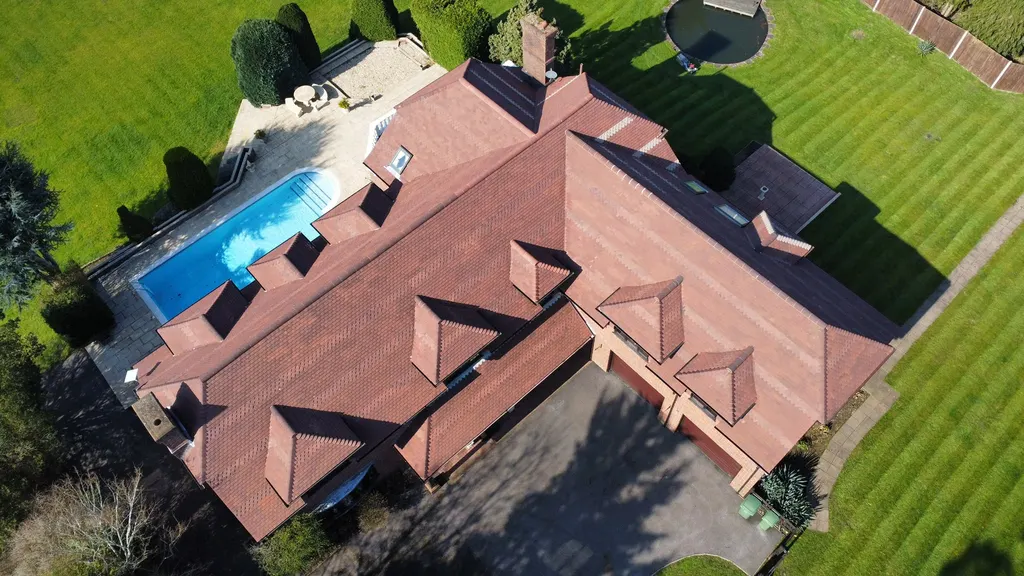
Biocide treatment
Where appropriate, a biocide treatment is applied after cleaning to target remaining spores and growth. It helps slow the return of moss, although shade, trees and moisture will always affect how quickly a roof needs attention again.
Is soft washing the same as roof cleaning?
Not quite. Softwashing uses low pressure and suitable cleaning solutions to lift organic growth from compatible surfaces such as render and walls. For roofs, removing the physical moss comes first, using one of the methods above, and any treatment follows. If you would like your walls and roof done together, we can quote for both.
Should you remove roof moss yourself?
We understand the temptation, but we would not recommend it. Roofs are slippery when damp and mossy, and working at height is one of the most common causes of serious injury. The Health and Safety Executive has guidance on why it needs proper planning and equipment.
There is also the roof to think about. A household pressure washer used at close range can lift or damage tiles, strip surface finishes and push water where it should not go. Scraping with the wrong tool can crack older tiles.
When is the best time to clean a roof?
Roofs can be cleaned for much of the year, but the weather on the day matters. Heavy rain, frost and high winds make the work less safe and can affect treatments, so we plan visits around the forecast.
Many people book after autumn leaf fall, when moss is easy to see and gutters are collecting what the roof sheds. Others prefer spring so the roof looks fresh for summer. The best time is the one that lets us work safely on your roof.
What happens after the moss is gone
A sound but heavily covered roof can look dramatically fresher once the moss has gone. Existing age, repairs or colour variation may still show. When the roof work is finished, we wash down the accessible windows, doors, conservatories, gutters and downpipes affected by the clean at no extra charge, and your written quotation confirms the areas covered.
Cleaning can also reveal problems that the moss was hiding, such as cracked or slipped tiles or worn pointing. If anything needs attention, we will tell you. Some roofs may also be suited to our roof repair and seal service.
Getting a quote
Roof size, pitch and covering, tile condition, the level of moss, access, garages or extensions and the method required all shape the price. A few photos of your roof and your postcode are a good place to start. We cover Southampton and the surrounding areas, and you can see more about roof cleaning in Southampton on our local page.
Ask Moss Boss UK for a free roof cleaning quote and we will explain which method suits your roof before you book.